

What if the freshest, most flavorful ingredients weren’t imported from afar but waiting just around the corner? The hyper-local ingredients movement is transforming everyday meals into vibrant, seasonal experiences rooted in community. As more people seek transparency and taste, this shift answers a growing disconnect between consumers and their food sources—replacing long-haul, anonymous produce with ingredients harvested at peak freshness. In this guide, you’ll discover how sourcing locally elevates flavor, supports neighborhood growers, and builds a more sustainable food system, along with simple, actionable steps to bring the best of your area straight to your table.
Choosing local food does more than fill your plate; it reshapes flavor, finances, and the future. First, consider freshness. Produce picked at peak ripeness undergoes less respiration, the natural process where plants lose sugars after harvest. When food travels 1,500 miles, nutrient degradation accelerates, according to the USDA. By contrast, a tomato driven 15 miles often reaches your kitchen within hours, preserving volatile flavor compounds that make sauces sing. Flavor memories thrive when ingredients are truly fresh and local. It even supports why comfort food is making a sophisticated comeback.
Next, follow the money. Studies from the American Independent Business Alliance show locally spent dollars recirculate up to three times more than those spent at national chains. In other words, your farmers’ market haul may help fund schools and services. Critics argue local food costs more. Sometimes it does. However, that premium often reflects fair wages and soil-friendly practices, not inefficiency.
Finally, think emissions. Shorter supply chains mean fewer food miles, a term describing the distance ingredients travel from farm to fork. Fewer miles typically equal lower carbon output, as noted by the EPA. Looking ahead, I suspect communities that prioritize local sourcing will see stronger brands and resilient systems.
Your Practical Guide to Joining the Local Food Movement
Joining the local food scene doesn’t require a lifestyle overhaul (despite what the sourdough influencers suggest). It just takes intention.
Master the Farmers’ Market
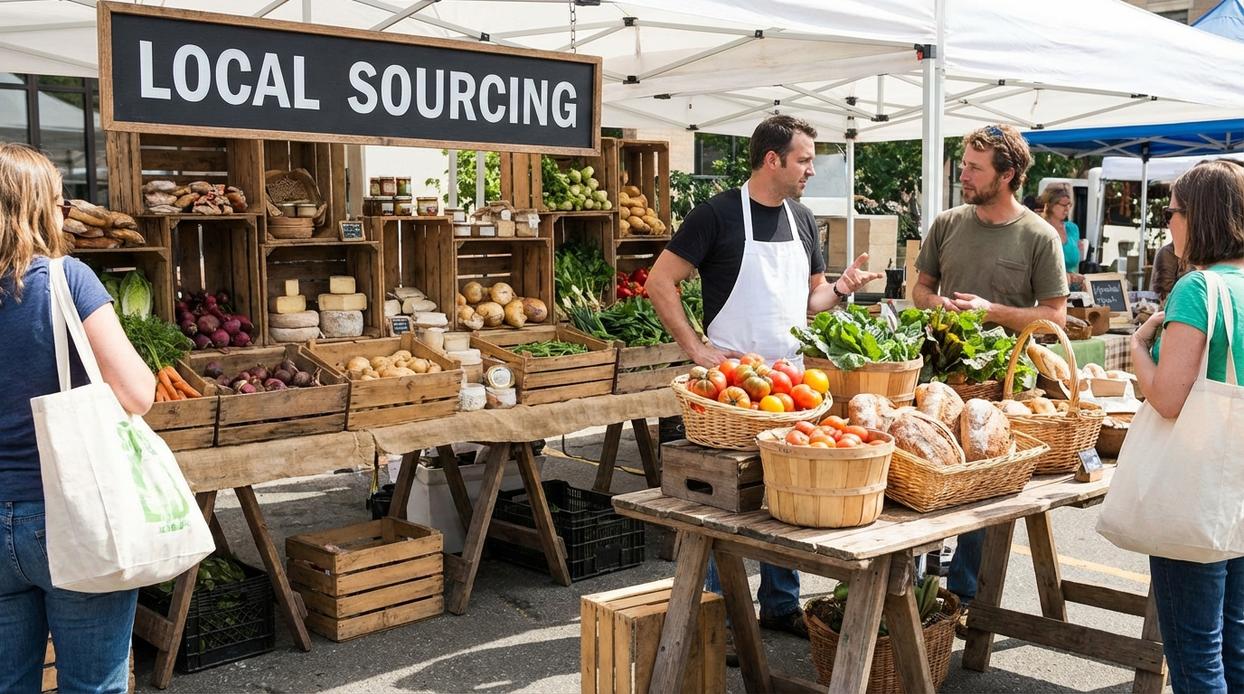
If you’re heading to a farmers’ market, don’t tunnel-vision on a shopping list. Ask vendors, “What’s tasting best this week?” Farmers know what’s thriving right now, and peak-season produce simply tastes better (and often costs less). Arrive early for the best selection—especially for eggs and berries—or swing by near closing for potential deals. Both strategies work; it just depends on whether you value choice or savings more.
Unlock the Power of a CSA
A CSA (Community Supported Agriculture) is essentially a subscription box for fresh, seasonal food. You pay upfront and receive a weekly share of whatever the farm harvests. In my opinion, it’s one of the most meaningful ways to participate in the hyper-local ingredients movement because it creates a direct relationship between you and the grower. You share the bounty—and occasionally the risk—of the season. Learn more about how CSAs work at https://www.localharvest.org/csa/.
Become a Label Detective
No time for markets? Fair. At the grocery store, scan for “grown in” labels or regional signage. Many chains now highlight nearby farms. It’s not as romantic as chatting with a farmer, but it counts.
Start Small: Grow Your Own
Even a windowsill works. Try:
- Mint for drinks and desserts
- Basil for pasta and mocktails
- Chives for eggs and soups
Fresh herbs transform meals (pro tip: snip just before serving for maximum flavor). Small steps, big taste payoff.
From Farm to Shaker: How Chefs and Businesses Champion the Cause
The Rise of the Hyper-Seasonal Menu
Restaurant A prints the same menu year-round. Restaurant B rewrites it every week based on what nearby farms harvest. The difference? Energy. Hyper-seasonal menus (menus built entirely around ingredients at peak harvest) feel alive. When tomatoes disappear in October, so do the caprese salads. In their place: roasted squash with brown butter and sage. This is the hyper-local ingredients movement in action—less predictability, more flavor. Critics argue it’s inconsistent for guests. But consistency of quality often matters more than consistency of items (ask any fine-dining regular).
Building Direct Producer Relationships
Chef A orders from a distributor’s catalog. Chef B calls a farmer to request purple heirloom carrots or lemon basil. Direct sourcing fosters agricultural diversity (the cultivation of varied crop types instead of mass monocultures). Yes, it requires planning and flexibility. But the payoff? Dishes no competitor can replicate. Pro tip: pre-season crop conversations secure exclusivity before planting even begins.
Spotlighting Local Artisans
Local sourcing isn’t just produce. Compare a generic cheese board with one featuring a nearby creamery, craft brewer, and small-batch distiller. The second tells a story. Some say broader sourcing lowers costs. True. But a thriving flavor ecosystem—bakers, butchers, winemakers—creates depth that guests taste immediately (and remember).
Unlocking Peak Flavor: A Seasonal Approach to Sourcing and Pairing
I still remember biting into a strawberry at a roadside stand in late May—sun-warm, juice running down my wrist, nothing like the pale supermarket versions (night and day, honestly). That moment taught me that eating locally means eating seasonally. Spring brings the snap of asparagus and peppery arugula. Summer delivers lush stone fruit and tomatoes so sweet they barely need salt. Fall settles into earthy root vegetables and crisp apples. This rhythm is the heart of the hyper-local ingredients movement.
The Art of Seasonal Pairings
- Spring: Simmer strawberries and rhubarb into a simple syrup for cocktails.
- Summer: Blend basil and peaches into infused water or a bright vinaigrette.
- Fall: Roast carrots with thyme and a splash of cider.
Some argue global sourcing offers variety year-round. True—but flavor peaks in season (think farmers’ market, not freezer aisle).
Tasting Tip: Visit a U-Pick farm. A berry eaten moments after harvest tastes alive—vivid, fragrant, unforgettable.
Your Next Meal Can Reshape Your Community
You came here wondering if your everyday food choices really matter. Now you can see how the hyper-local ingredients movement restores flavor, strengthens small producers, and repairs the disconnect in our distant, impersonal food system.
The real pain point isn’t just bland meals—it’s losing connection to where your food comes from and who it supports. Choosing local puts that power back in your hands.
Take action today: visit a nearby farmers’ market, ask your favorite café about their sourcing, or swap one grocery item for a local alternative. Join the growing community reshaping food from the ground up—one plate at a time.

 There is a specific skill involved in explaining something clearly — one that is completely separate from actually knowing the subject. Christopher Pitcheristic has both. They has spent years working with tasting tips and seasonal menus in a hands-on capacity, and an equal amount of time figuring out how to translate that experience into writing that people with different backgrounds can actually absorb and use.
Christopher tends to approach complex subjects — Tasting Tips and Seasonal Menus, Gourmet Techniques and Recipes, Culinary Pulse being good examples — by starting with what the reader already knows, then building outward from there rather than dropping them in the deep end. It sounds like a small thing. In practice it makes a significant difference in whether someone finishes the article or abandons it halfway through. They is also good at knowing when to stop — a surprisingly underrated skill. Some writers bury useful information under so many caveats and qualifications that the point disappears. Christopher knows where the point is and gets there without too many detours.
The practical effect of all this is that people who read Christopher's work tend to come away actually capable of doing something with it. Not just vaguely informed — actually capable. For a writer working in tasting tips and seasonal menus, that is probably the best possible outcome, and it's the standard Christopher holds they's own work to.
There is a specific skill involved in explaining something clearly — one that is completely separate from actually knowing the subject. Christopher Pitcheristic has both. They has spent years working with tasting tips and seasonal menus in a hands-on capacity, and an equal amount of time figuring out how to translate that experience into writing that people with different backgrounds can actually absorb and use.
Christopher tends to approach complex subjects — Tasting Tips and Seasonal Menus, Gourmet Techniques and Recipes, Culinary Pulse being good examples — by starting with what the reader already knows, then building outward from there rather than dropping them in the deep end. It sounds like a small thing. In practice it makes a significant difference in whether someone finishes the article or abandons it halfway through. They is also good at knowing when to stop — a surprisingly underrated skill. Some writers bury useful information under so many caveats and qualifications that the point disappears. Christopher knows where the point is and gets there without too many detours.
The practical effect of all this is that people who read Christopher's work tend to come away actually capable of doing something with it. Not just vaguely informed — actually capable. For a writer working in tasting tips and seasonal menus, that is probably the best possible outcome, and it's the standard Christopher holds they's own work to.